Call for Papers for the 2027 Textile History Forum
July 30th, 31st, August 1st, 2027Marshfield, Vermont Here is a great opportunity to share your current research! We are looking for papers and presentations for the next Textile History Forum. The Textile History Forum is seeking papers, presentations, and works in progress on any aspect of textile research currently being done including any aspect of textile history, textile tools, textile process, and textile design from prehistory to present day. The Textile History Forum is an informal but intense weekend of papers, demonstrations, and works-in-progress open to anyone interested and enthusiastic about textiles, textile tools, the traditional textile process, fabric history, and material culture. Presenters from all areas of textile interests are encouraged to share their research; no formal academic credentials are necessary. Paper Presentations: Written papers are published in our Proceedings, an unedited, spiral bound publication available at the beginning of the Forum and given to all participants as part of the Forum’s philosophy that discussion and active participation with others is the best way to explore our interests and further our research. We encourage anyone to submit a short abstract of one or two paragraphs with the stated topic, for review by January 15th, 2027. Authors retain the copyright of their papers and are free to publish elsewhere. Once abstracts are approved, papers and details of presentations are due May 15th 2027. Works-In-Progress: If you do not wish to submit a paper, Works-in-Progress and non-paper presentations are also included in the Proceedings as short descriptions of research that is nascent in hopes gaining feedback and information through the Forums collaborative atmosphere. In the past the Forum has included papers about prehistoric footwear, contemporary fashion designers, historic dye analysis, ingrain carpet factories, Coverlet Weavers of Ohio, Rose Blankets, Glove making, Knitting traditions, Weaving in Ecuador on traditional card looms, Quilts, Reed making, Corsets and Undergarments, White Work, textile tools, labor in early mills, textile production in Lowell, and much more. S. Rabbit Goody began the Textile History Forum in response to the Dublin Seminar on New England Culture, in the late 1990’s. It has met every two years since, and published papers in the Proceedings, which is available to participants, libraries and by purchase to the public. The intent of the Forum is to encourage new voices to share their research in a scholarly but non-academic setting. At this upcoming Forum, we especially encourage those who have been doing research in traditional hand process to share what they know so that traditions are not lost. We learn more from each other and we learn the most over a good lunch! Please think about presenting a paper or works-in-progress at the Textile History Forum at the Weaver’s Croft! Please think about presenting a paper or works-in-progress at the Textile History Forum at the Weaver’s Croft July 30th through August 1st, 2027. Abstracts and submissions should be sent to: S. Rabbit GoodyThistle Hill Weavers101 Chestnut Ridge Rd Cherry Valley NY 13320 or Emailed to: rabbitgoodythw@gmail.com Phone 518.284.2729
Textile History Forum 2025 Press Release
Friday, August 1Saturday, August 2Sunday, August 3 Contact: Rabbit Goody, Thistle Hill Weavers, (518) 284-2729, rabbitgoodythw@gmail.com Held bi-annually at The Weavers Croft in Marshfield, Vermont, the Textile History Forum is a unique space for those working on research–both academics and non-academics–to present in-person and receive feedback from fellow researchers. Plus, there’s plenty of good food and good fun. “I always think of it as a big lunch,” said Rabbit Goody of Thistle Hill Weavers in Cherry Valley, New York, the Forum’s founder. Kate Smith hosts the event at her farm. “There’s no other place where people can get together and talk about their research, ask questions, and maybe expand their knowledge,” Goody said. “I love weaving, but what I enjoy most is getting people together to talk about their research. At the Textile History Forum, there are a lot of opportunities to connect one-on-one with all of the presenters over the three days, not just at their presentations.” The 2025 Forum will run Friday, August 1-Sunday, August 3. You can register now at thistlehillweavers.live or by mail: Thistle Hill Weavers, 101 Chestnut Ridge Road, Cherry Valley, NY 13320, (518) 284-2729. For more information, email at rabbitgoodythw@gmail.com This year’s keynote speaker will be Michael Nix, British historian and author of “Norwich Textiles: A Global Story 1750-1840,” which won the East Anglian Book Award for History and Tradition in 2023. Nix was also a contributing author to “The Exeter Cloth Dispatch Book 1763-1765” which won the Academic Award for the Best Book on Devon’s History in 2022. Also this year, Norman Kennedy, who founded the Marshfield School of Weaving in 1975, will be honored at Saturday’s lunch. In-person cost for the three days is $275 and includes lunch and dinner on Saturday, keynote address, and lunch on Sunday. Registration includes a copy of the proceedings. There is an opportunity to Zoom some of the in-person presentations. Zoom registration is $75 and includes paper presentations and the keynote address. Copies of the Proceedings will be available to Zoom registrants for the cost of postage. Presenting at the 2025 Forum will be: FridaySusan E. Picinich–1830s Corset Work.Peggy Hart–Wool Quilts as a Record of Historic Fabric.Liyuan Dai–The Effect of Iconoclasm on Textiles in the Byzantine Era.Maggie D’Aversa–Tracing the Remnants of the Rhode Island Slave Trade. SaturdayAnna Whitaker–Weaving and the Woolen Industry of Clearfield Co., Pennsylvania During the 19th Century.Sandra Rux–Silas Burton: Weaver, Reed Maker, and Teacher in Stratford, Connecticut, Prospering in the New Republic.Dr. Mathilde Frances Lind–Arrowcraft and the Appalachian Weaving Revival in Gatlinburg, TN, 1925-1962.Frances Richardson–Betsy Morton’s Recipe Book, c. 1845.*Patrick Malone & Gray Fitzsimons–Incremental Innovation on the Shop Floor: The Unexamined Role of Loom Fixers and Weavers.Steve Dunwell–Photographs of Mill Workers.Andrea Myklebust & Kristina Bielenberg–Warp Weighted Loom Use in Norway in History and Now.Lori Triplett–Early Indigo Resist Textiles from Bermuda.Michael Nix, keynote speaker, Author of “Norwich Textiles: A Global Story 1750-1850.” SundayCornelia Frisbee Houde–Importance of Clothing to the Historical Narrative.Michele Phillips Carmel–Anu Raud: Estonian Weaver and Poet.Mac Whatley–The Roots of the American Power-Loom.Michelle Amos–Lou Tate and the Evolution of the Little Loomhouse.Sergio Emilio Tapia–Experimental Weaving in Santa Maria del Tule, Oaxaca, Mexico. * Work in ProgressWhat is the Textile History Forum?The Textile History Forum is an academic meeting that brings together textile historians, students, researchers, museum curators, independent scholars, artisans, dealers, and collectors. Research papers are published in the Proceedings, available the day of the Forum. Authors retain copyright on all printed publications and are free to publish their work in other venues.
Textile History Forum 2025
Upcoming workshops and classes in 2025
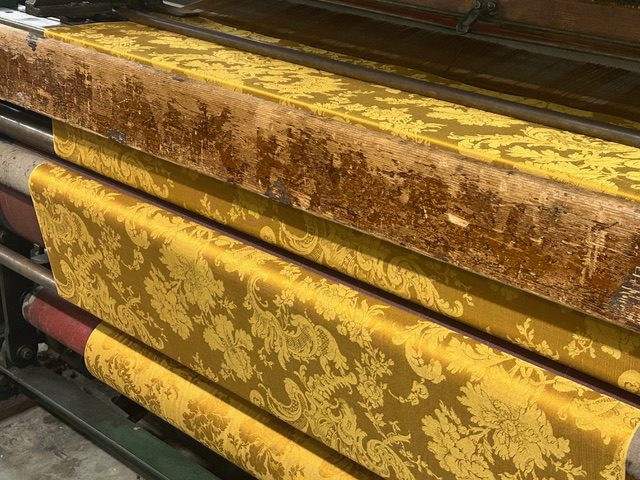
I rarely get the opportunity to write a newsy letter from Thistle Hill Weavers, but 2025 has found me at the computer in the office ready to get started on the New Year. I also hardly ever get to introduce the crew here at Thistle Hill Weavers: Raina Roe, Dan Myrick, Holly Oakley, Crystal Wack, Lisbeth Ruggeri, and Betty Muscarella. The crew here is really the heart and soul of Thistle Hill Weavers and although often less visible than I am, they are the weavers and finishers who get the job done. We have some interesting projects ahead of us this year in addition to the upholstery fabrics for our long time clients we are working on two projects for Hyde Hall – George Clarke’s bed hangings and Anne’s bed hangings and carpet. We are finishing up the silk damask for the Fulford House in Canada and some private client damasks for window treatments. I will be teaching a few workshops this year here at the mill, and at Kilts Farm in Stone Arabia, New York, and Historic Eastfield Village in Nassau, New York. But the BIG NEWS for those of you interested in textile history is this year’s Textile History Forum to be held August 1, 2 and 3 in Marshfield VT at Kate Smith’s Weavers Croft. We have invited Michael Nix from England to be our keynote speaker this year. Michael’s book on Norwich Textiles: A Global Study 1750 to 1840. is helpful to understanding the production of worsted cloths that were so much a part of the 18th and 19th century. Workshops and classes in 2025 Design and Drafting Patterns for HandweaversFebruary 15th and 16th9:30-4:00 This is class for hand weavers who want to understand weave structure and pattern formulas. This is not a weaving workshop, instead, we will be drafting patterns and weave structures on graph paper and computers. Understanding of how the intersection of threads work to form useful structures allows us to create our own patterns and textiles that serve both as beautiful fabrics but also meet our needs for drape and durability. The goal of this class is for students to be able to design their own patterns using weave formulas rather than printed drafts.. A bibliography will be sent ahead of the class. Lunch is included. Class is limited to six students. $125 Historic Textile Workshop: Reading Historic Weaver’s Drafts and Examining Historic TextilesMarch 22nd and 23rd This is a hands on work shop, a combination of reading and interpreting the weaving recipes left by fancy weavers and vernacular weavers and examining historic coverlets woven using these drafts. There are so many different short hand methods of recording threading and treadling patterns. We will look at styles that became the backbone of American hand weaving in the colonial revival and styles that are unusual. Lunch is included. Class is limited to 10 students. $125 Spin, Span, Spun at Historic Eastfield VillageJune 14th and 15th Spinning Straw into Gold or Spinning on traditional spinning wheels. Do you own a traditional spinning wheel? This workshop is geared to folks who are already familiar with spinning but want to improve their knowledge of traditional spinning techniques and the care of traditional wheels. Saturday we will work on treadle and flyer wheels (low wheels, flax wheels). We will get your spinning wheel running if it needs some work and we will break, and heckle flax and dress distaffs for spinning linen. Sunday we will work with walking wheels (great wheels, wool wheels) and spin wool and cotton. We will look at different accelerating heads that were available in the 19th century. Previous spinning knowledge is preferred as we will not have enough time to be able to teach beginning spinning. However, if you have a wheel but don’t know how it works and want to get your wheel in good condition please join us. This workshop will be held at Historic Eastfield Village, Nassau NY Bring Your Spinning Wheels – Opening Day at Kilts Farm, Stone Arabia, NYMAY 18th Calling all spinners, traditional and modern…come spin for the day at Kilts Farm. Join me and enjoy showing the public the variety of our wheels in motion.
Call For Papers for the Textile History Forum 2025
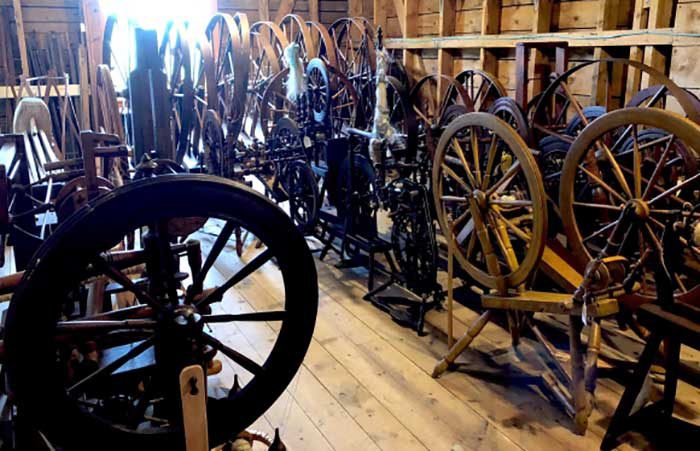
2023 Textile History Forum Schedule
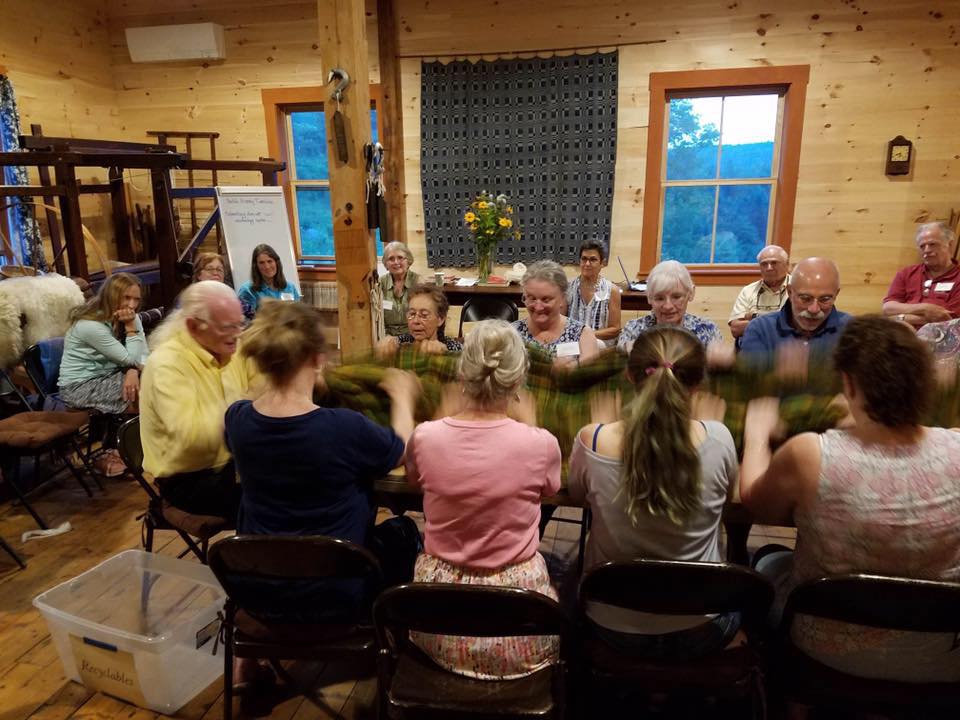
Join us for an Exciting Textile Forum
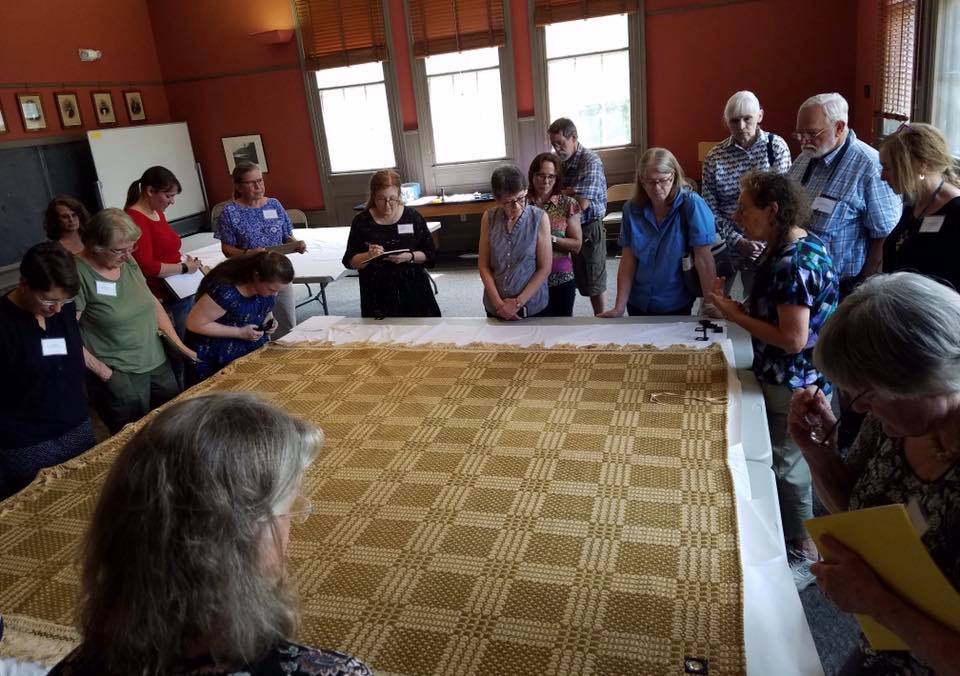
Call For Papers: Textile History Forum 2023
Call For Papers: Textile History Forum 2023Friday, July 21 – Sunday, July 23, 2023Lone Rock FarmMarshfield, Vermont The Textile History Forum is an academic meeting for textile enthusiasts, researchers, and textile producers that seeks give a voice to current research outside of strictly academic confines. The Textile History Forum brings together textile historians, students, researchers, museum curators, independent scholars, artisans, dealers and collectors Research papers are published in the Proceedings available the day of the Forum. Authors retain copyright on all printed publications and are free to publish their work in other venues. The Textile History Forum seeks papers and presentations on all aspects of textile history from the Pre-Columbian period through the twenty-first century, including textiletechnology, costume, quilts, weaving, dyeing, spinning, technological innovations and textile availability. The Forum is looking to include additional aspects of material culture i.e. how textiles fit into their cultural and social places, how textiles are valued, ceremonial use of textiles and the individuals who made and used them. The Textile History Forum encourages the submission of scholarly work from historians, anthropologists and economists as well as independent researchers, individuals working the field, crafts people and collectors. Current and unpublished research is especially encouraged. Those interested in presenting a paper at the Forum should submit a one-page proposal. In addition to formal paper presentations, those interested in presenting a “work-in-progress” are also encouraged to submit a few paragraphs about their work. The Works-in-progress sessions are short presentations and no written paper is required. Please encourage others to share their research with us. Thank you!
Textile History Forum YouTube Channel

We’ve started a YouTube channel for our collection of historic fabrics. You can subscribe from the YouTube page.
Call For Papers for the 2020 Textile History Forum
The 2020 Textile History Forum, scheduled for July 31 – August 2 at Hyde Hall, Springfield NY, & Thistle Hill Weavers, Cherry Valley NY, seeks papers and presentations on all aspects of textile history, from the Pre-Columbian period through the twenty-first century, including textile technology, costume, quilts, weaving, dyeing, spinning, technological innovations and textile availability. For this year’s Forum, we are looking to include additional aspects of material culture i.e. how textiles fit into their cultural and social places, how textiles are valued, ceremonial use of textiles and the individuals who made and used them. An important aspect of this year’s Forum will be a discussion of where and how private textile collections should be housed over the next several decades. The Textile History Forum encourages the submission of scholarly work from historians, anthropologists and economists as well as independent researchers, individuals working in the field, crafts people and collectors. Current and unpublished research is especially encouraged. Those interested in presenting a paper at the Forum should submit a one-page proposal. Authors retain copyright on all printed publications and are free to publish their work in other venues. The Textile History Forum brings together textile historians, students, researchers, museum curators, independent scholars, artisans, dealers and collectors from around the country for three days of intense exchange. Participants will have the opportunity to take a behind the scenes tour of the Hyde Hall textile collection. This collection is unparalleled in its surviving early damasks, trims, tassels and ornamental drapery hardware. Forum participants will also have the opportunity to examine the hand textile tools located in the storage facility of the Farmer’s Museum in Cooperstown, NY. Please encourage others to share their research with us.